
The three formats solve different jobs. A useful comparison starts with the operating environment, vehicle class, storage constraint and expected frequency—not with appearance or price alone.
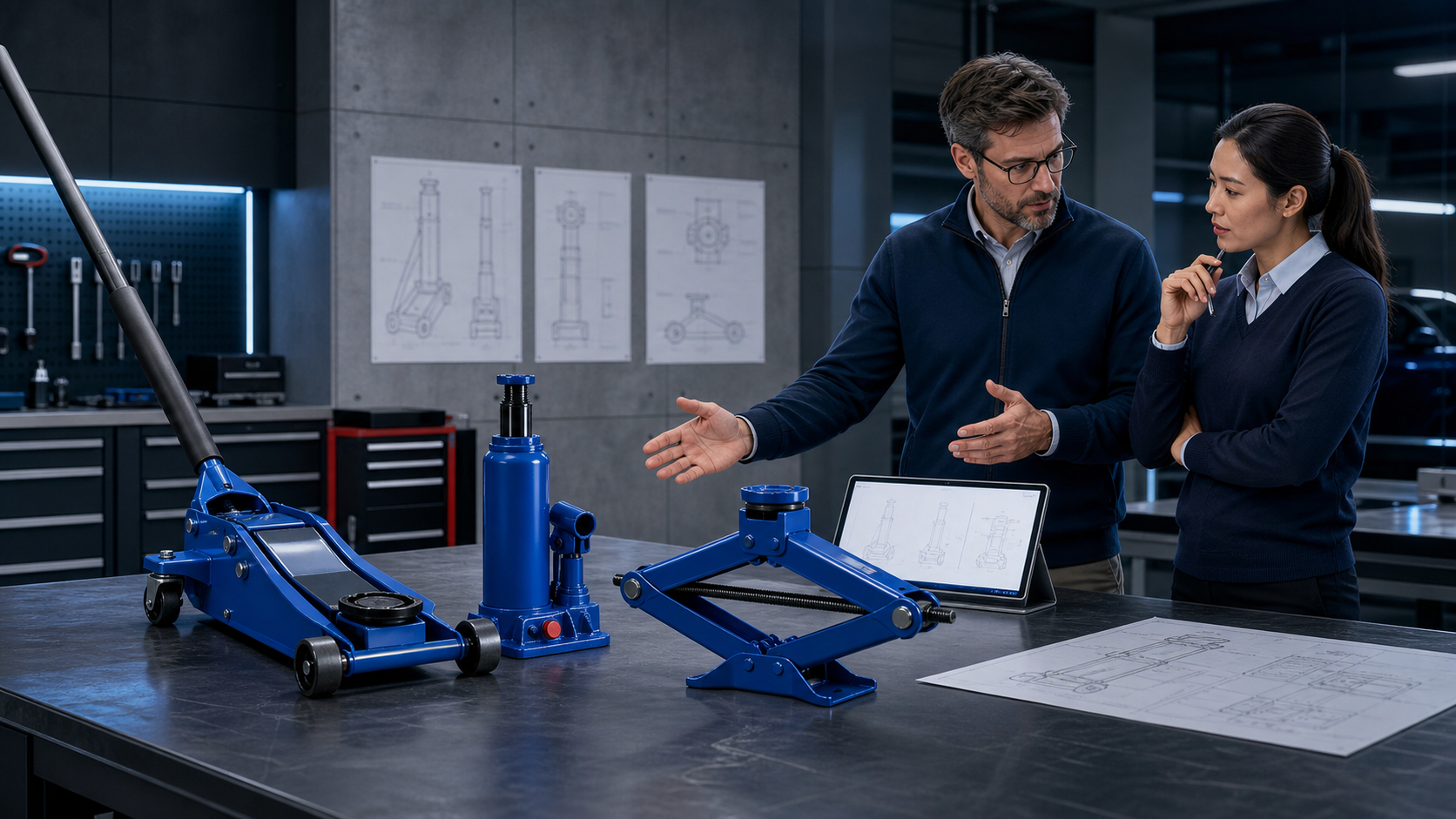
Floor Jacks for repeat service
A Floor Jack prioritizes controlled workshop positioning, a low chassis and repeat handling. Review entry height, wheel quality, handle reach and the intended vehicle mix.
Bottle Jacks for capacity-led programs
Bottle Jacks offer a compact vertical format across a broad capacity range. Minimum height, base stability, screw adjustment and available clearance under the lifting point are critical.
Scissor Jacks for vehicle emergency kits
A Scissor Jack is compact and mechanically simple. Match saddle geometry, working height, crank operation and storage footprint to the passenger-vehicle program.
Build the assortment around applications
Importers and retailers often need more than one format. Define a workshop, fleet or emergency route first, then freeze model-level specifications and commercial positioning.
Move from guidance to documented models.
Open the relevant product dossier for capacity, height, MOQ, packaging and model-level RFQ context.
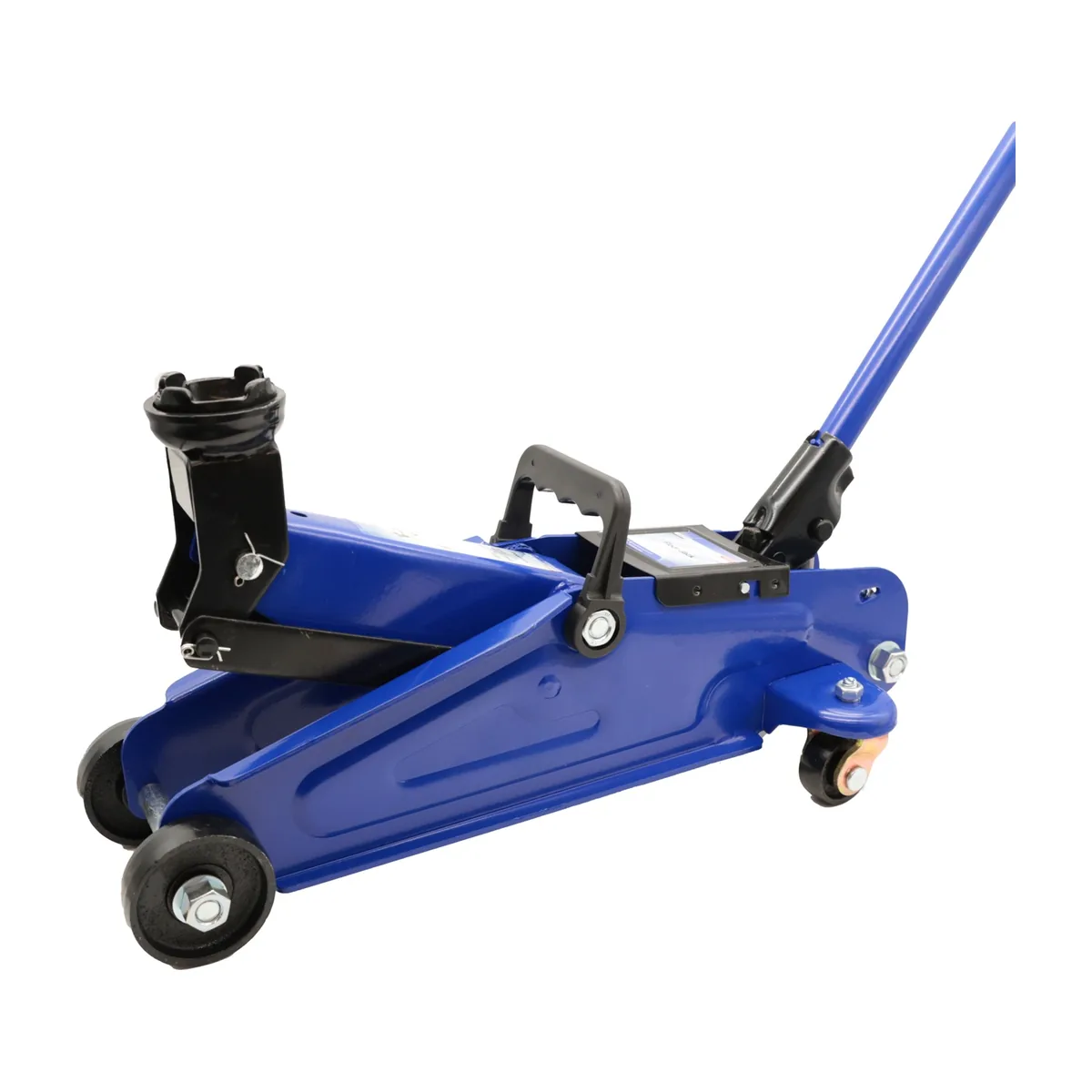
2T Heavy-Duty Floor Jack
135 mm min · 335 mm max · 1,000 sets MOQ
Open product dossier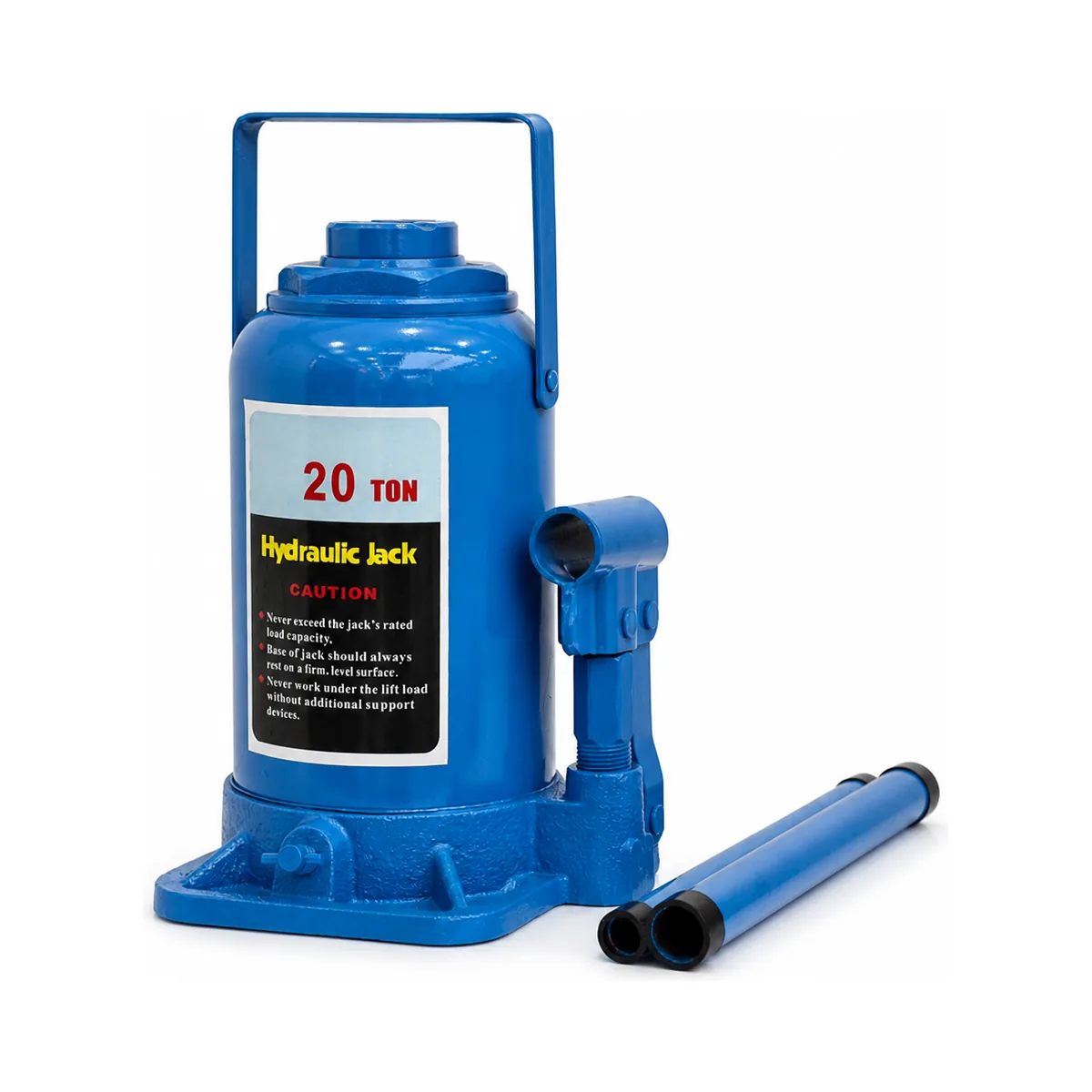
T554 Standard Bottle Jack Series
148–255 mm min · 278–445 mm max · 500 sets / SKU MOQ
Open product dossier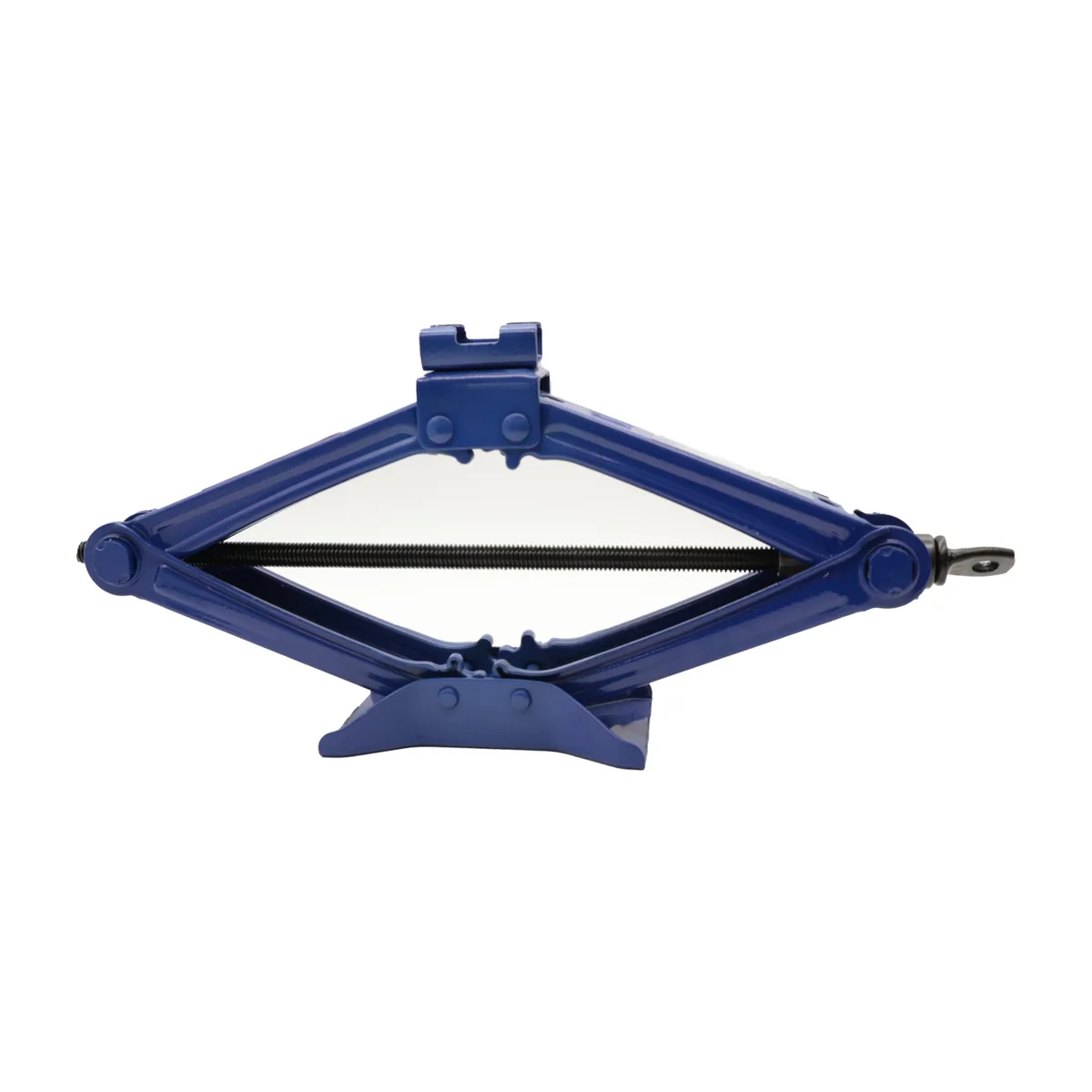
2T Extended-Lift Scissor Jack
95 mm min · 395 mm max · 1,000 sets MOQ
Open product dossierQuestions to resolve before approval.
Final suitability, commercial terms and document scope follow the exact model, target market and ordered configuration.
Which Jack type is best for a retail assortment?
There is no universal answer. Retail programs normally separate workshop, fleet and roadside needs, then select one or more formats for each price and application tier.
Can the same capacity replace a different Jack format?
No. Equal rated capacity does not make height, stability, lifting point, handling or intended use equivalent.