
12V vehicle-powered and 21V rechargeable platforms create different operating and merchandising propositions. The correct choice depends on the user journey, vehicle access, charging expectations and included tools.
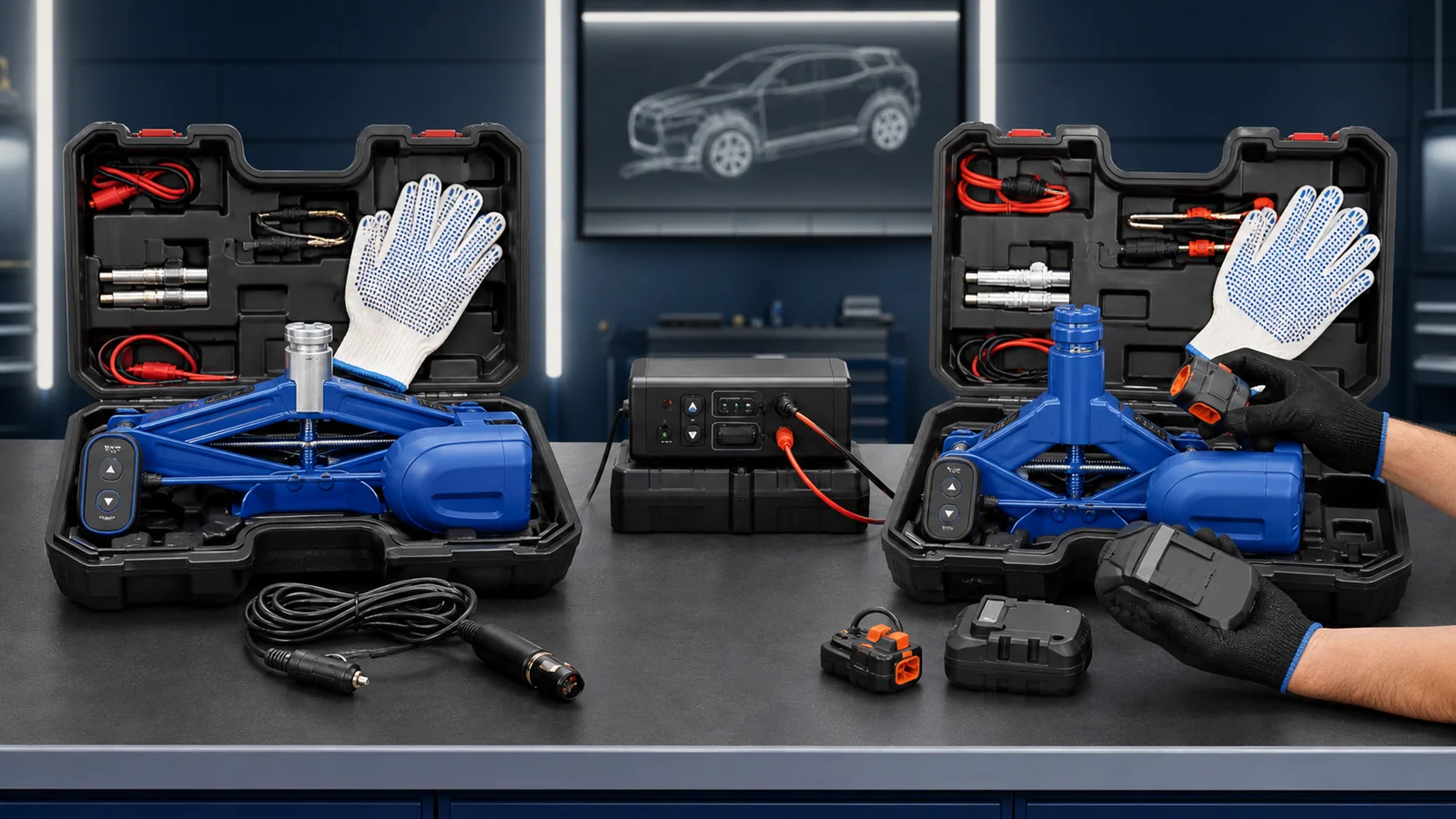
Map the power source
A 12V system normally depends on a vehicle power connection. A 21V platform introduces battery, charger, storage and state-of-charge considerations.
Confirm the lifting configuration
Power source does not define lifting suitability. Review minimum height, maximum height, saddle format, controls and the supplier-stated vehicle class for the exact model.
Specify the complete roadside kit
Inflator, impact wrench, lighting, clamps, cables, spare fuses, gloves and warning accessories should be frozen in one packing list.
Control electrical and market files
Confirm plugs, charger input, labels, battery transport information, manual languages and destination-market requirements before artwork approval.
Move from guidance to documented models.
Open the relevant product dossier for capacity, height, MOQ, packaging and model-level RFQ context.
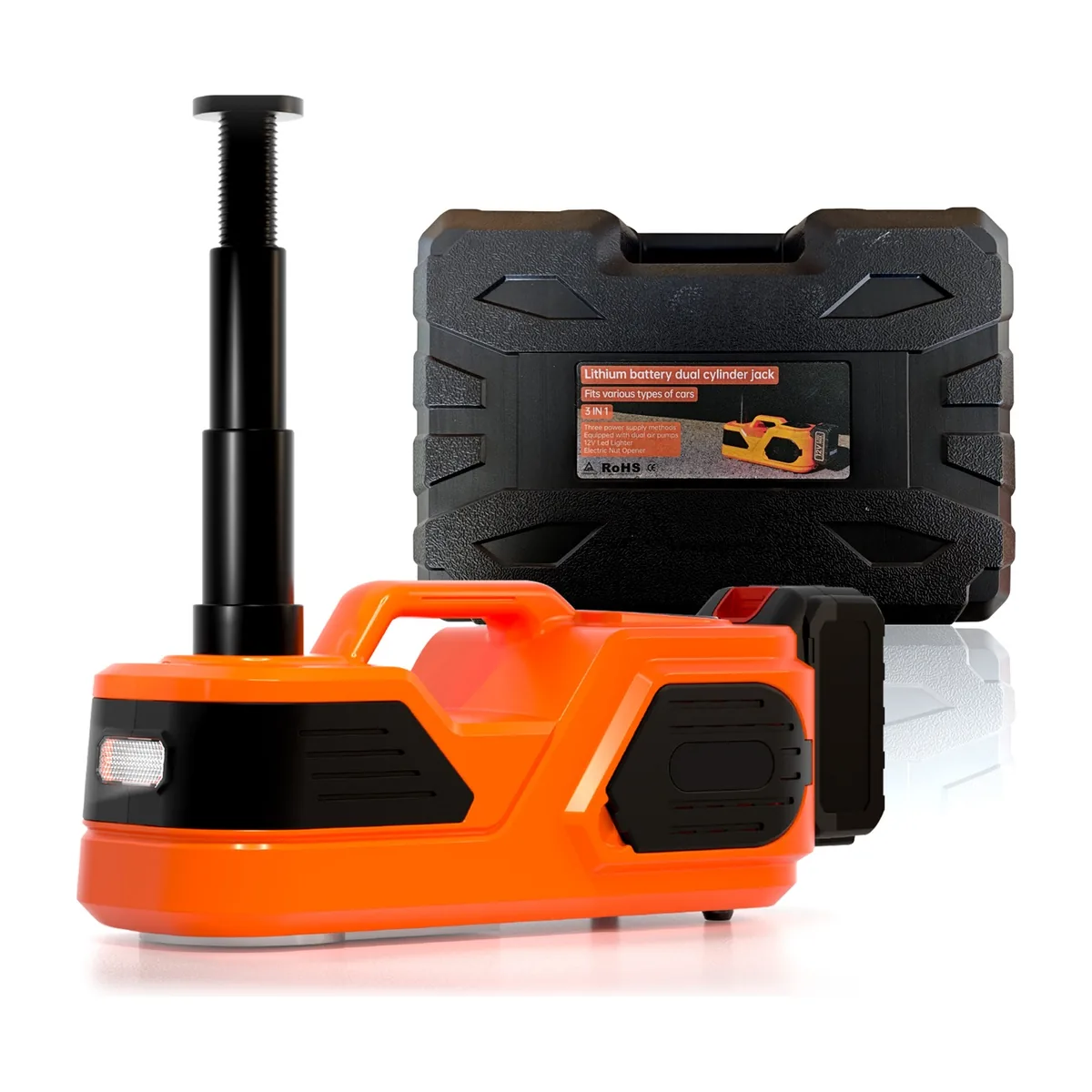
21V Dual-Cylinder Jack & Inflator
135 mm min · 360 mm max · 51 sets MOQ
Open product dossier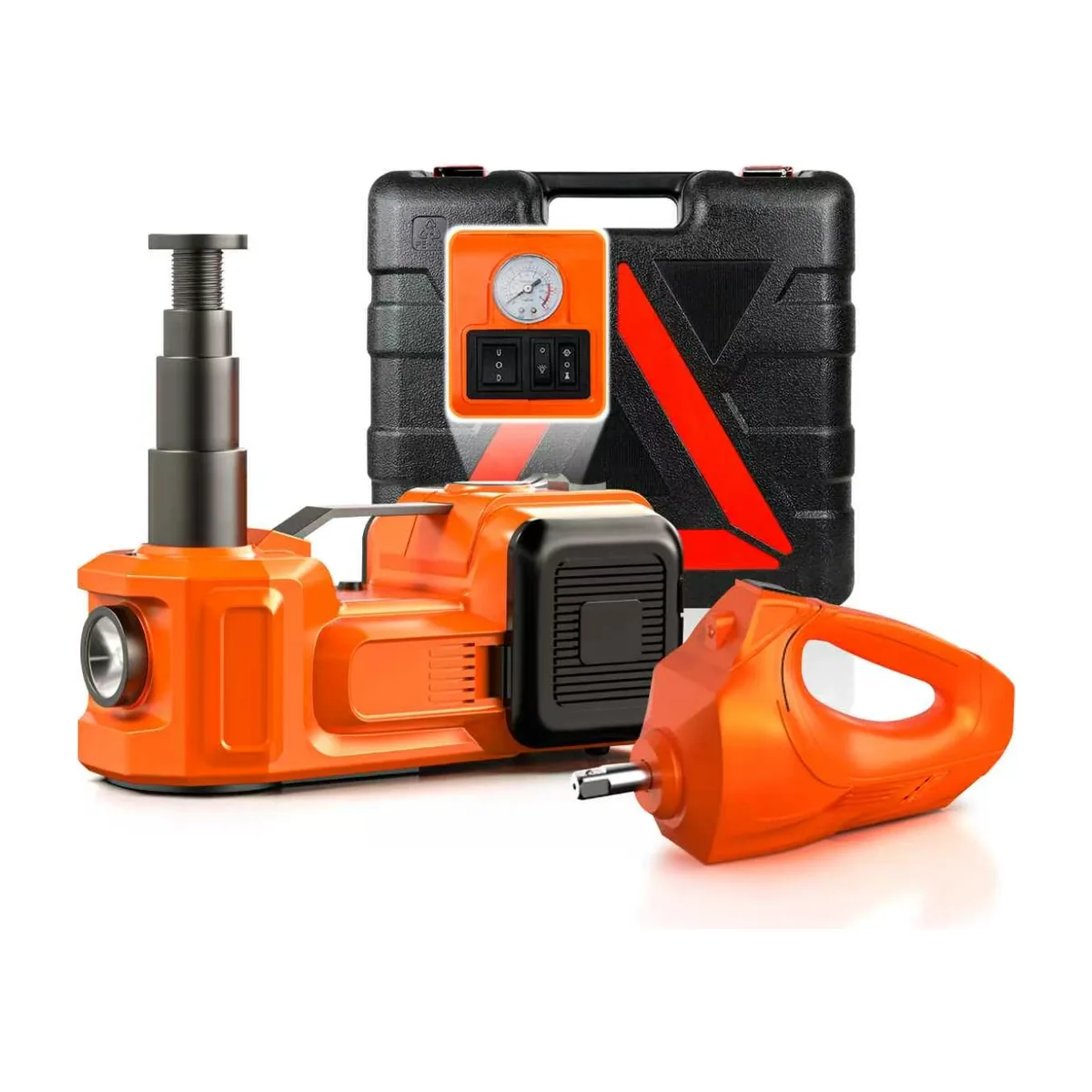
12V Jack, Inflator & Wrench Kit
135 mm min · 360 mm max · 51 sets MOQ
Open product dossier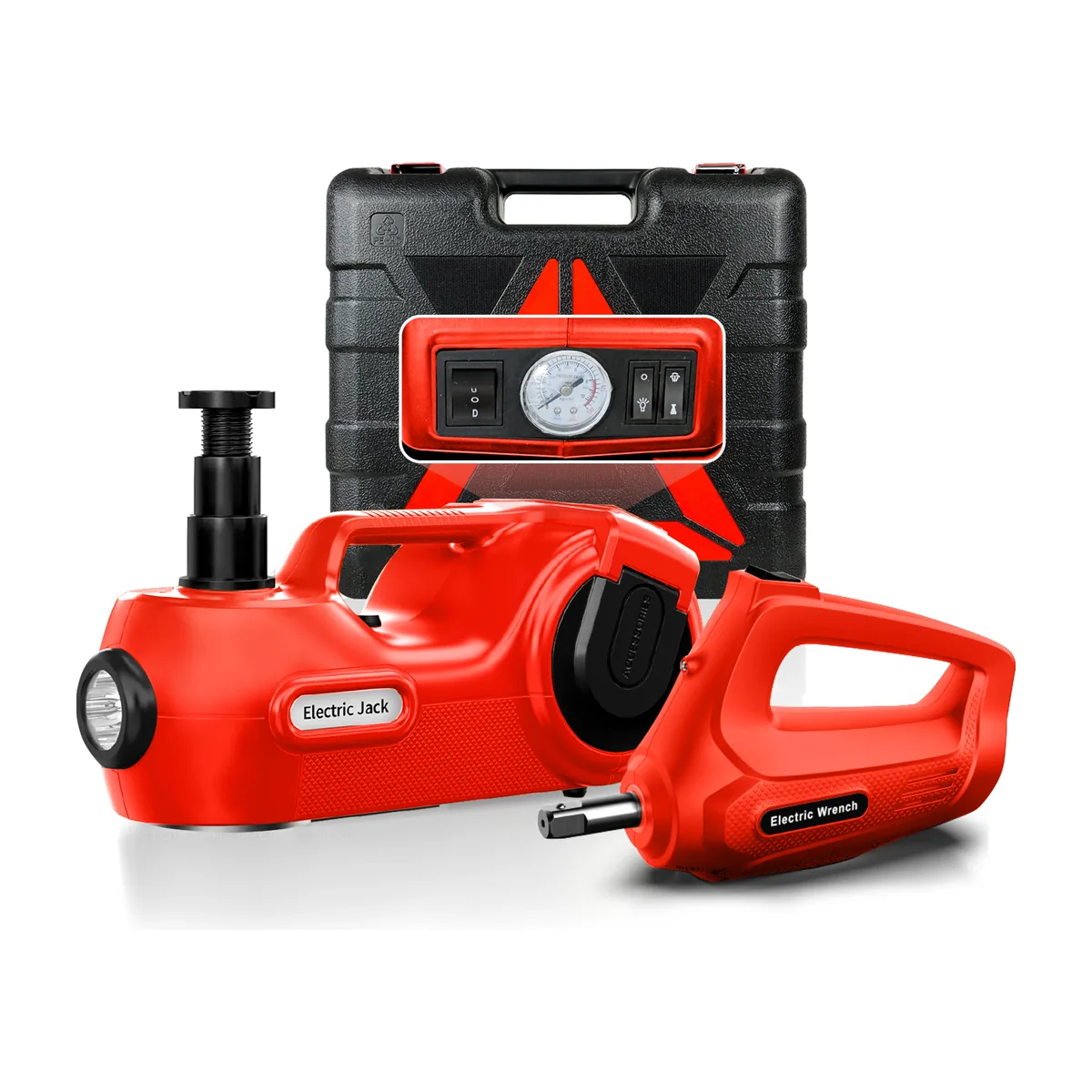
12V Digital Emergency Jack Kit
135 mm min · 360 mm max · 51 sets MOQ
Open product dossierQuestions to resolve before approval.
Final suitability, commercial terms and document scope follow the exact model, target market and ordered configuration.
Is 21V automatically more powerful than 12V?
Voltage alone is not a complete performance claim. Compare the exact motor, lifting mechanism, controls, working range and verified model data.
Can accessories be changed for a private-label kit?
They can be scoped, but every change affects the packing list, case layout, manual, artwork, quotation and sometimes the document review.